Taiye Adeshina Abayomi
Coaching for sustainable improvement
Improving patient enquiry response times through Plan, Do, Study, Act coaching, after COVID-19 exposed a process that had never been designed.
No account or sign-in needed. The original summary is shown below.
Tap the page to open the PDF and zoom in.
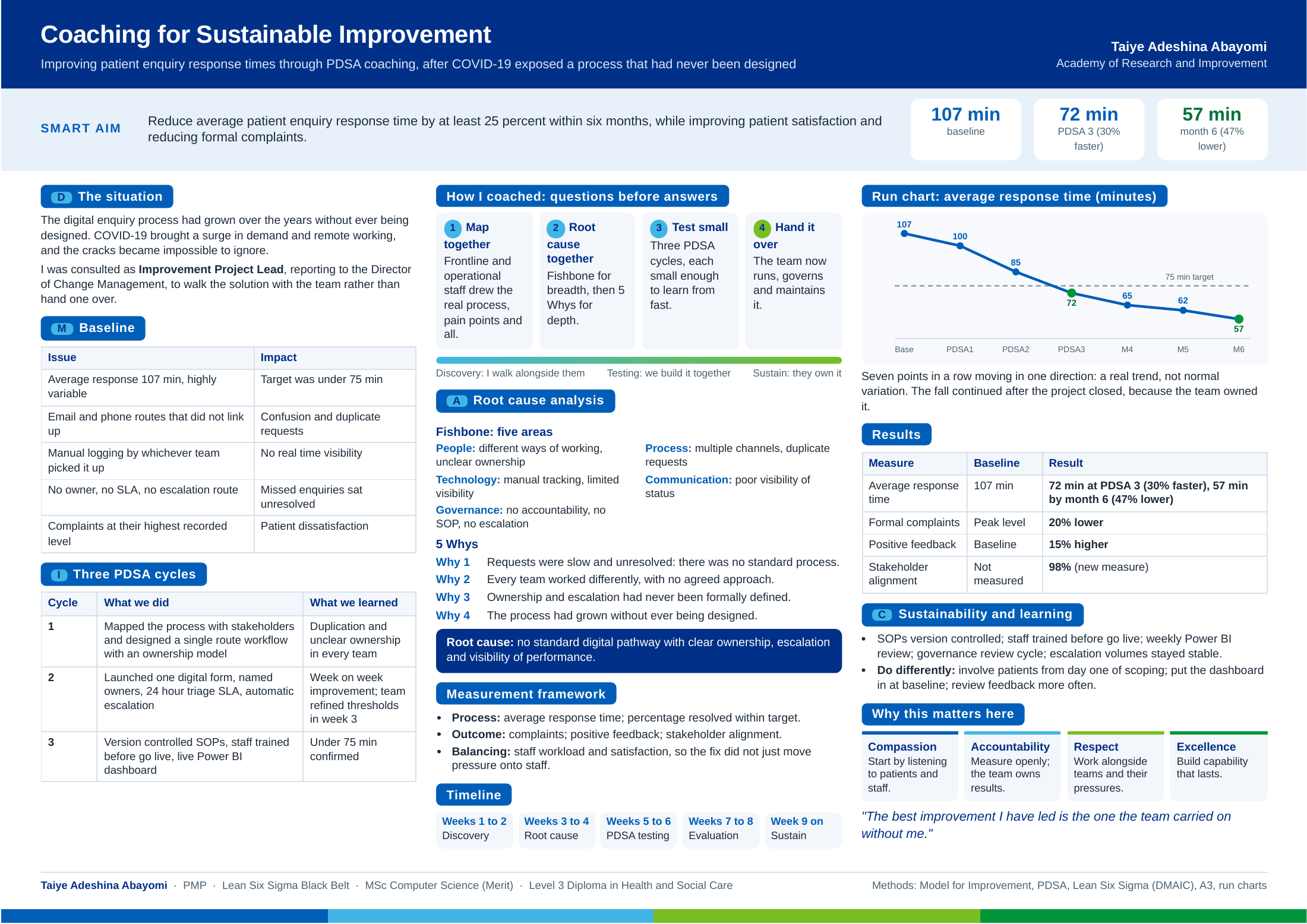
The aim
Reduce average patient enquiry response time by at least 25 percent within six months, while improving patient satisfaction and reducing formal complaints.
The situation
The digital enquiry process had grown over the years without ever being designed. COVID-19 brought a surge in demand and remote working. Taiye was consulted as Improvement Project Lead, reporting to the Director of Change Management, to work through the solution with the team.
The starting issues included disconnected email and phone routes, duplicate requests, manual logging, unclear ownership, and no agreed response target or escalation route.
How I coached
- Map together. Frontline and operational staff drew the real process and identified pain points.
- Find the root cause together. A fishbone analysis explored people, process, technology, communication and governance. Five Whys helped identify the lack of a standard digital pathway with clear ownership, escalation and visibility of performance.
- Test small. Three Plan, Do, Study, Act cycles developed a single route workflow, a digital form, named owners, a 24 hour triage service level agreement, automatic escalation, standard operating procedures, training and a Power BI dashboard.
- Hand it over. The team runs, governs and maintains the process, supported by weekly reviews and version controlled procedures.
Results reported in the summary
- Average response time fell from 107 minutes to 72 minutes after the third cycle, then to 57 minutes by month six.
- Formal complaints were 20 percent lower.
- Positive feedback was 15 percent higher.
- Stakeholder alignment reached 98 percent as a new measure.
Learning and sustainability
Staff were trained before launch. Weekly dashboard reviews, an agreed governance review cycle and stable escalation volumes supported the handover. Staff workload and satisfaction were included as balancing measures.
Next time, I would involve patients from the start of scoping, establish the dashboard at baseline and review feedback more often.
“The best improvement I have led is the one the team carried on without me.”
This phone overview is adapted from the supplied one page summary. The original PDF contains the full chart, methods and qualifications.